
Category: fangirl

I Read A Book: Laina Dawes’ What Are You Doing Here?: A Black Woman’s Life and Liberation in Heavy Metal

Tamar-Kali and her band in Chicago

-By Raizel Liebler

If you are a fan, you should read Laina DawesWhat are You Doing Here?: A Black Woman’s Life and Liberation in Heavy Metal. Seriously. Yes, if you happen to sit in the middle of the venn diagram of North American, African-descent, female, and fan (or creator) of metal, then this book will likely speak more closely of your own personal experience.

But it is important for fans, consumers, and producers of media more generally to hear about these experiences — about lines of inclusion and exclusion. This book is part of the continued serious discussion about fandom — and I would place it alongside Henry Jenkins’s Textual Poachers: Television Fans and Participatory Culture and Deena Weinstein’s Heavy Metal: The Music and the Culture. These were some of the first books that took fandom seriously and showed that fans weren’t mindless Deceptacons, following the lead of big Consumerism (Megatron), but participants in the creation and continuation of culture. Henry Jenkins inspired many, including us to create The Learned Fangirl, and I fully expect What Are You Doing Here? to do the same for future audiences.

Dawes weaves together the disparate threads of perceptions of women of African descent (especially in North America), the history of Black women artists that “rock”, the experiences of fans first finding and engaging with metal, and about the difficulties of staying a metalhead for Black women. This isn’t an academic book — instead it is a work of cultural journalism — but it is smart throughout.

Dawes writes movingly about her fandom and the fandom of other Black women:

Talking to people for the first time about my favorite music, I catch myself preparing for the inevitable. I mentally rehearse my replies before the questions about my musical preference arise. I find the process stressful–and I wonder if I am being paranoid for thinking I will have to defend myself. … Black metalheads, especially black women, can expect to be publicly regarding their behavior, through negative comments, or in some cases, physical harassment. (83, 82)

Despite barriers, the black women that Dawes interviews still forge a connection to the music that speaks to them … and their experiences. She writes about fans who are accepted (except when they are not) and the difficulties of Black female metal musicians, finding the right “niche” in the present music industry.

I especially appreciate the discussions of sexism and racism in metal, including the different ways that Black female metalheads deal with these elements — ranging from limiting their music fandoms to dismissing anything that stands in the way of their love of the music. Dawes spends a large section of one chapter describing the aftermath of one particular example of racism — a statement by Pantera’s Phil Anselmo at a concert in the mid-90s. She describes the impact this had on metal fans, and those that use this statement as a rallying cry. But she also describes how Anselmo decries his past behavior, including but not limited to that statement, but (It is strange however that she doesn’t discuss the sexism that creeped into Pantera’s music at the same time; both negative moves have been later rejected by Anselmo.)

This book also comes at an important time for metal. Despite the stereotype by many that metal is now only the brutal subgenres that are from Scandinavia, much of U.S. metal is being created by bands that include women of people of color — ranging from Metallica & Slayer through Living Colour and Sepultura — and now TV on the Radio, etc.

Too often the only white guy asked “What are you doing here?” is Doctor Who — and he’s fictional (and not human). Privilege allows only a limited group of people to have any musical taste accepted by all — and hopefully this book will be an important step in showing that metal is music for all.

Summary: Metal isn’t music for white dudes  — it is music for all, and Dawes’ book helps to prove it.

For more, TLF has an interview with Dawes here and here is her NPR interview.

(Disclaimer: The other co-founder of TLF, Keidra Chaney, is one of the interviewees cited in the book, including mentions of her important essay in Bitch Magazine — Sister, Outsider, Headbanger.)

4minute

TLF has bad taste: The “our remix album drops in 2012″ edition

Around December every year, music critics put out their lists of best albums of the year. Considering much of what we liked this year were singles, live recordings, and the new Baroness, we are presenting to you, the readership of TLF, our favorite music that is probably not quality, but we still love – and not ironically.

Below are the first four songs in our TLF has bad taste series proving both that we don’t know how to do a year in review — and own our bad taste.

You’ve Got the Touch – Stan Bush (1986) & Dirk Diggler (1997)

This song has the unique distinction of being used in crucial scenes in two very different films: Transformers: The Animated Movie in 1986 and Boogie Nights in 1997. This song is corny to be sure, the kind of squealy guitar-driven anthem that 80’s films are now derided for, but the original version is delivered with such passion and sincerity it’s hard not to love it. It makes me feel better about myself at least, it pumps me up when I’m at the gym, going shopping, drinking a beer, doing a PowerPoint presentation. The Boogie Nights version sung by Mark “Marky Mark” Wahlberg (badly), was used cleverly by Paul Thomas Anderson in more of a “guy hitting rock bottom” context, making it no less awesome, but for a different, darker reason. – KDC

Down Boys – Warrant (1989)

Once again I come out of the hair metal closet. Music snobs love to hate on the hair metal bands of the late 80’s and early 90’s, because of the cheese factor, even though bands like Warrant, Skid Row and the like spanked the grunge set, when it comes to performance and overall star quality. Warrant especially gets a bad rep because of Cherry Pie, which honestly, is an awful song, not just because of its sexist video. Even though I pledge allegiance to the (mostly) heavier side of metal, I cannot deny the awesomeness of Down Boys. I will seek it out on Rdio, I will blast it with no shame. The song is tough but melodic, catchy and dripping with ‘tude. The hook is undeniable, the chorus made for a boozy sing-along. Jani Lane went to his grave trying to run from the spectre of Cherry Pie, but I’ll always remember Warrant for this song, one of the best that hair metal had to offer. – KDC

Fantasy (Remix) — Mariah Carey (1995)

We listened to Mariah through her early “no; absolutely not — my mom is an opera singer; my dad is Latino; yes, I’m mixed” era, but had stopped being fans by the time she got too close to ice cream. However, Mariah had her best worst song in her from Glitter. Put together Puffy, ODB from WuTang rapping a simile comparing babies and pacifiers to his relationship with Miss M, the world’s longest sample of the Tom Tom Club’s Genius of Love, and you have music history. This song is so wrong, it’s right. We haven’t yet seen this remix at karaoke, but when we do, there will be ownage. This is also the only song on our list that “real” critics have tried to justify their love of and also led to one of our all-time favorite New York Times corrections. -RL

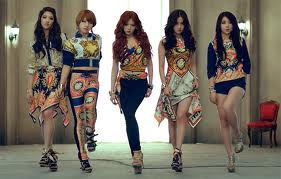
Volume Up –4Minute (2012)

I like k-pop unashamedly. However, no matter how bubblegum-tastic kpop can be, sometimes it just goes too far. This song puts together almost everything I generally hate about music — saxophone (I normally turn off any song with sax), 4/4 time, in a major key, screeching Dio-like female singing, pointless rising crescendo, an abrupt ending … but somehow it just works as a complete ridiculous whole and I just can’t help but like it. Perhaps this is a long-delayed reaction to how I don’t super-hate the worst song ever created on purpose. -RL

answerme1997-shi-won

TLF Says You Should Be Watching: Answer Me 1997

The Learned Fangirl is steeped in the experience of being a fangirl. Unfortunately, there aren’t nearly enough pop culture examples that are from the perspective of fangirls. Fortunately, there is Answer Me 1997 (2012), a Korean drama, half-set in 1997, the starting point for K-pop’s unending hallyu wave of manufactured groups. This is a show for present or former fangirls of music — from Beatlemaniacs through the Metallica/Megadeth fan battles to those with Bieber fever.

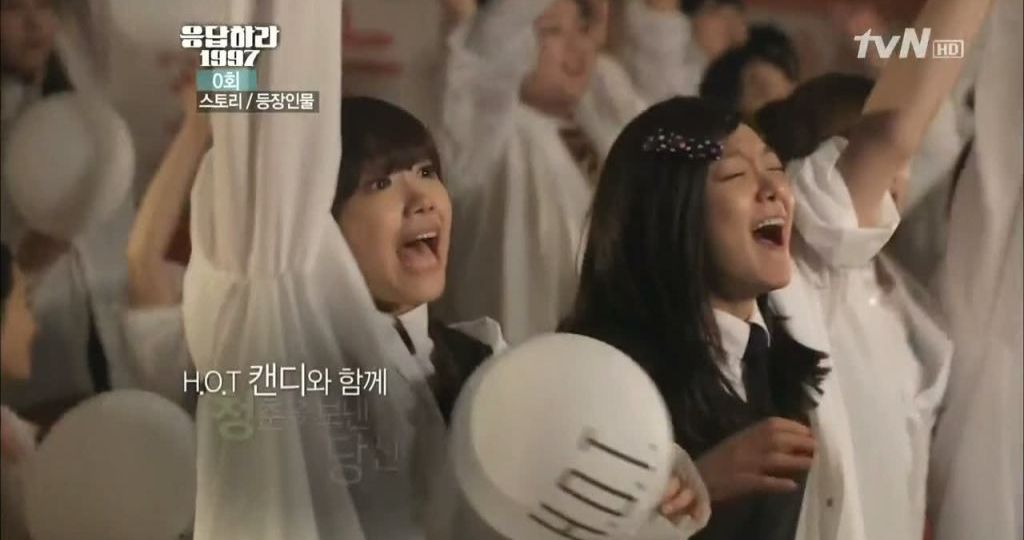
What is so delightful about this show — from the first episode to the last — is that it shows fandom as a powerful, distracting, encompassing, and motivating force in the lives of fans, especially female fans. The show starts when the characters are teenagers, so it shows all of the aspect of high drama that only is possible with the heady mix of hormones, groupthink, and innocent obsessiveness of teenage girls. I laughed knowingly during the first episode when the main character Shi Won almost loses her mind dancing along to H.O.T. in the aisles, nearly passing out from pure fandom excitement.

Throughout the show, fandom is respected in a way rarely seen (and even rarer to see sustained through the entire run of a show). Friendships are tested, but never broken, due to being part of different fandoms. The show is based around the real-life Sechskies/H.O.T. fanwars, but also delves into real world issues, such as inclusiveness, especially of gay (& closeted) fans to traditionally female fandoms.

The fandom of the characters is so serious that one of the main characters as an adult is still known as Mrs. Tony — her teenage nickname based on her love of Tony (from H.O.T). And as an adult, a minor character despite her high profile job, still manages to be the head of a fan club. There is also a strong flavor for the idea that being an obsessive fan is passed down from mother to daughter — even if the object of the fandom varies, much in a similar way to the honored tradition of sports fandom being passed from father to son.

To show the recursive aspects of the show, most of the actors on the show have also been the objects of this type of fandom, considering many of them have been idol singers themselves. The writers clearly know how much they are poking at fandom by having the equivalent of a former real-life Backstreet Boy (here: member of Sechskies) portray the boyfriend of an obsessive fan of the Backstreet Boys.

This is a show that believes in fandom so much that a character wins a college scholarship based on her real-person slash-fanfic about her favorite group.

Dramabeans has great recaps of all of the episodes, but to watch the show, try Dramafever (my recommendation), Hulu, or VIKI. Be sure to watch Episode 0 if you want background on H.O.T. or other aspects of mid-90s Korean pop.

Learned Fangirls discuss fandom misogyny

by Vivian Obarski and Keidra Chaney

This conversation was on the heels of an in-person conversation that Viv and I had earlier this year, there’s much less profanity, but the ideas are the same. – KDC

VO: Is it just me or is this year the year of harassing geek women? There’s been tons of news about people questioning Felicia Day’s geek cred, the harassment of Anita Sarkeesian for the Tropes vs. Women in Video Games web series and the whole line of “what’s a real geek”? What’s even funnier is seeing this happen roughly at the same time as what was going on in the metal scene.

KDC: Definitely not just you, I think it’s happening in a number of fan communities, that “Girls don’t like metal” post from Metal Sucks comes to mind, even though it was last year. And there have definitely been similar sentiments pop up in other blogs. It’s like open season on chicks who dare to enjoy any kind of pop culture that isn’t Twilight or Fifty Shades of Grey. And it’s weird to me because I swear this level of anger towards women in fan communities seems relatively recent, or at least more pronounced as of late.

Is sexism in increasing in online fan communities?
Cross-gender Justice League at San Diego Comic-Con 2011Image; Roger Chang, Flickr

VO: I think that some of this that the conversation is coming to the forefront. The Internet is offering the ability for women to speak up and tell their stories and I suspect that (geek-wise) they’re upset because they’ve always been seen as the outsiders that welcome everyone, and it turns out it’s not quite the case. Plenty of my friends have stories of being talked down to or having people play their characters at conventions or where gaming professionals talk to their boyfriends or husbands even though they asked the question.

The anger to me is reactionary to them finally being called out on their shit. And it’s not every guy, but it’s also food for thought on the culture as a whole.

KDC: I definitely agree with you, it’s not like like girl geeks are anything new. they’re not even new to fandom, or online fan communities (i am thinking of old school Star Trek fandom, or the Beauty and the Beast TV show or X-Files fandom in the 90’s) But I do think social media has brought different subsections and fandom niches together in a way that never happened as much before and allowed (forced?) them to co-exist. There’s not a cross-pollination of fandom in-jokes, tropes and culture and maybe for some fanboys, I think there’s a feeling that their special club has been invaded.

Fandom diversity because “mainstream” with social media because it encourages a higher level of transparency, rather than the total anonymity of the old school Internet (BBS, Usenet, etc.) I’m sure back in the day, people thought I was a guy, with the screenname “Pastor of Muppets,” and the fact that I never made a point to call attention to my gender (or for that matter, my race) I’ve had a couple of different experiences with this because as a metalhead, I feel like I’ve not really been talked down to or condescended to much, but then, I’m not super active in online metal fandom, where I think there’s more of that kind of behavior. Personally, I feel like male-dominated online fan culture tends to be more combative by nature, which I think plays a big role.

VO: I think it’s also seeing a different perspective that may not mesh with what they want — for example the vitriol aimed at DC’s reboot and their portrayal of Starfire (which is really, really awful and I can’t see letting my daughter read that, even though she loves Tiny Titans and Teen Titans). It’s like they fail to realize that there’s other audiences out there and it’s more diverse than what they think.

What I don’t get is that by ridiculing others, they’re alienating a potential audience that was ALWAYS there, but never noticed. To say that we’re not “real geeks” or that our voices don’t matter is incredibly insulting. I mean, being ignored is one thing, but outright dismissed? That’s fucking war in my book. But this also reminds me of the rock scene and how people start slagging off on an indie band when they start playing MTV or getting larger audience notice. They’re not selling out – there’s just a wider audience than what you initially thought.

KDC: I do feel like issues of wanting to maintain the status quo come into play: people want what they want and in many cases, especially with fandom, radical change on any level is usually not welcomed with open arms, but this is different to me, this has way more to do with (here we go…) privilege and entitlement, the belief that these communities were only meant for men and can only speak to men and that women are interlopers. I think about the whole music blogger trend of classifying melodic or (non-brootal) metal as “girlfriend metal” as if a.) only women like melody b.) only melodic bands are “safe” or “appropriate” for women. Which of course is some grade- A bullshit. I really do think it has to do with the idea that women are not only participating in these fan communities, but also carving out spaces where the approval and participation of male fans as so – called “experts” is not needed or even considered as a factor of our own enjoyment.

So what to do? Is there anything we, as fangirls, can do, except continue to speak out and be ourselves?

VO: What I’ve seen from my friends, and what I tend to do is just keep on keeping on. Don’t leave because of some asshats (and really, most of the geek dudes I meet at Gen Con are good players and good guys overall) are being jerks. You call them out on that shit and make them rethink their positions. Also, for me, having a good group of friends who are willing to speak up also helps. My view is that they need to be reminded that we won’t go away. We are here to stay and we will continue doing what we like to do, even if you’re weirded out, feel the need to categorize it or talk down to us. We’re here whether you want us around or not.

We’d like to hear your thoughts. Is sexism in fandom on the rise? Or are we just hearing about it more via social media? Leave your comments!

Why We Can’t Nave Nice Things: The Return of Jem

Well, it’s happened. Integrity Toys has partnered with Hasbro to capitalize on the nostalgia of late-20 to mid-30 somethings and create Jem and the Holograms collector dolls. It worked for Barbie. Now for $125, you can have a Hollywood Jem right out of season two. Only now she kind of looks like a cross between Debbie Harry and RuPaul’s Drag Race contestant Morgan McMichaels.


It was kind of inevitable. Collector dolls are big business; just ask any hardcore Barbie fans or even some of comic geeks (just don’t call them dolls!) And of course, after the explosive popularity of the Transformers live-action movie and the not-as-explosive popularity of the G.I. live-action movie and the successful reboot of the My Little Pony toy line, Jem was the logical next step. Not to mention, Jem fandom has stood the test of time: there’s a JemCon (yes, there’s a JemCon) and the TV show box set sold pretty well. So I get why Integrity Toys would release a collector doll, but it doesn’t mean I have to like it. And in the case of Jem and the Holograms, I am vehemently against it.

Jem and the Holograms
has remained one of the few, relatively untouched remnants of 80’s pop culture, precisely because it is SO DAMN 80’s. The neon colors, the keytars, the “Girls Just Wanna Have Fun” hair, the keytars, the questionable sartorial choices (Pizazz and her one knee-high sock), the keytars, the 2 minute highly repetitive songs advertising the latest doll (“Glitter and Gold”) AND THE KEYTARS. I am a firm believer that the only reason we haven’t seen a live action version of Jem yet is because no screenwriter has figured out how to approach it. Is it a nostalgia piece set in the 80’s? Will Jem and the Holograms/The Misfits somehow be transported to the present day and go through culture shock? Will it be a snarky statement on the music industry in the post-Napster age? Clearly I’ve been thinking about this, but either way, I’m glad nothing serious has ever come from it.

My Jem fandom has unwavered because it’s been able to exist firmly in my memories (and YouTube), and I fear Jem’s move into collector doll territory is the last step before a full-on reboot. New dolls that look like Bratz or something. A live action movie with Katy Perry that is “darker” than the TV series (whatever that means) and with updated crappy Katy Perry music, because, of course.

So I know, if I don’t like the doll I don’t have to buy the doll, and I won’t. (I bet you they are totally gonna make the Shana doll, if they make one, look like a purple haired Beyonce) But these days, what seems to pass as popular culture these days is just lazy retreads from the 80’s. Transformers was ruined for me, so was G.I. Joe, now Jem is about to get destroyed and I WILL NOT STAND FOR IT. I WANT MY MEMORIES. At this point the only 80’s toy/cartoon nostalgia I’ll have left is She-Ra. And that’s not really worth remembering.

Unexpected Allies: Decibel Magazine’s Feminist Take on the DC Reboot

In the December 2011 issue of Decibel magazine (“America’s only extreme music magazine”), I read the interesting, but expected Dave-Mustaine-this-time-he-is-totes-over-his-feuds-he-means-it-even-if-he-is-called-SuperDave-and-Junior-isn’t-called-Junior story; lots of short articles with bands filled with fourth-degree clones of Zakk Wylde; and the usual review of extreme albums that I won’t be listening to.

But unexpectedly, especially for a magazine dedicated to metal and other extreme music, there is an actual for-real feminist take on the DC reboot that says that treating women as soulless objects is not entertainment. For an audience that reads a magazine featuring bands with album covers that will give children nightmares.

Unfortunately not online, Joe Gross’ one-page column dissects the reason why the reboot doesn’t make economic sense, by turning away girls and women (and men and boys) that aren’t interested in a “cruel, violent vibe and crueler sexual politics”, asking the question “Who the fuck is this crap for?”

He says that between the reboot “and a noticeable decline in women creators at DC, it would be tough for the company to have constructed a bigger “Fuck you, we don’t want your money” to potential female readers”. And that is a potentially huge loss for an industry that could use new readers — or at least not lose older newly disgusted fans. Perhaps it is just those that I know, but a large percentage of the comics fans I know *are* people of difference (such as women/girls, people of color, gay/queer, some other other, or a combination) — not the stereotype of Comic Book Guy.

One of the benefits of having this article written for this particular audience is demonstrated by the pull-quote on the page:

I’ve seen hardcore, [gnzo p!@#] that treated women with more dignity that DC is treating those two gals [, Catwoman and Starfire]

THAT knowledge is not likely to be found by writers from traditional feminist sources, even third-wave ones.

Gross also references “the terrific essay” by Laura Hudson on Comics Alliance, The Big Sexy Problem with Superheroines and Their “Liberated Sexuality”.

Thank you, Decibel. And to Shortpacked (who created the economics of comics comic above). And to all of the disappointed seven-year old American comics fans, may I suggest mahou shoujo (and manhwa)? It isn’t without issues, but that’s where I’m sending the comics-loving kids in my life.

Nine Inch Nails fan video project rebrands as pan-fandom collective

Interesting news for both fans of NIN and followers of fan culture, fan-works and ownership. The grassroots fan organized video production collective This One is On Us made some waves for their organization and dedication to documenting Nine Inch Nails last tour with high-quality video and audio recording. As mentioned in a TLF post from last year, this was done with the  approval of Trent Reznor, who loosened venue taping policies so that fans could participate. And as we presented at MIT, Nine Inch Nails has been highly supportive of fan remix/reuse.

With NIN on an indefinite hiatus, the TOIOU  fan community has announced a “rebranding” of the collective, now with  a broader, pan-fandom focus. The organization will no longer be NIN specific, based on the collective’s early draft of a mission statement, that states:

We aim to restore live music as a shared, passionate entity, and work with those who embrace new media and the realities of the Internet to build on their relationship with fans through collaboration and to create unique documents of their live events. Providing organizational, technical and financial support, we encourage fan communities to plan and execute first-rate film and audio recordings, and turn the resulting content into professional quality releases.

In addition, the organizers intend to formally establish TOIOU as a non-profit organization.

Interesting news, and worth watching. TOIOU was able to exist and succeed based in part because of the unusually collaborative and open relationship between Reznor and his fans. If TOIOU is to take this model and attempt to replicate it in other music fandoms, particularly for mainstream, big-ticket musical artists with particularly devoted live fanbases,  but a more restrictive approach to fan relations. I expect challenges for the group in future.

Metallica and their historically tight rein on fan-produced live recordings comes to mind because the band has been charging members for high-quality recordings of live performances for years now (yet they have also previously made money from fan recordings). Will TOIOU become a sort of fan advocacy organization? One that assists  fan-producers with the infrastructure support to pull of what the NIN fandom did? The current draft of the mission statement seems to imply this, but it is, admittedly, a work in progress.

YouTube has become a sort of live music library where fans (including myself) may share and upload videos of their favorite musician’s latest performances. For live music junkies there’s opportunity in this.  For record labels and big-ticket live music  promoters, there is a perceived threat. TOIOU has a lot of work cut our for it, but I am excited to see where it goes next.

The Economic (and LOL power) of I Can Has Cheezburger

The New York Times recently had an article on LOLcats, specifically the ICanHasCheezburger site, and I wondered, what took so long? Is it because it seems so … silly? Or is it because the idea of female nerd culture (not to say that those that are not female or nerds don’t enjoy LOLcats, but really) seems like a non-money making venture and thereby uninteresting?

While I’ll be writing a longer review in response to Clay Shirky’s Cognitive Surplus: Creativity and Generosity in a Connected Age, one aspect of the book that really bothered me was the way he seemed so dismissive of ICanHasCheezburger. He calls the process of creating a LOLcat “the stupidest possible creative act” with the “social value of a whoopee cushion and the cultural life span of a mayfly.” He does, however, consider it to be an example of participatory culture — perhaps equal to Cartoon Network.

In an interview on NPR’s Morning Edition, he explains his viewpoint a bit differently, but I wonder how many readers are going to seek out this “explanatory footnote”:

SHIRKY:  But the interesting thing about lolcats, about these cute cats made cuter with the application of cute captions, is that when you see a lolcat, you get a second message which is: You can play this game, too. All right, when you see something on television, the message is: You could not do this, you can only consume this.
There is a giant gulf between doing something and doing nothing. And someone who makes a lolcat and uploads it – even if only to crack their friends up -has already crossed that chasm to doing something. That’s the sea change, and you can see it even with the cute cats.

But one aspect that Shirky does question — and that the New York Times gazes over in amazement (similar to the “weird Japan” newsreporting meme) is that someone is getting paid. But it is the owners of ICanHasCheezburger who are making seven figures (for the entire family of  sites) — not those creating LOLcats, who receive merch for their creative output.

Shirky describes concerns about labor efforts in participatory culture (and thereby fan culture in general):

If ICanHasCheezburger.com, purveyor of lolcats, is a late-model version of the fifteenth-century publishing model, then the fact that its workers are contributing their labor unpaid is not only strange but unfair. But what if the contributors aren’t workers? What if they really are contributors, quite specifically intending their contributions to be acts of sharing rather than production? What happens if their efforts are an effort of love?

We here on The Learned Fangirl have discussed the labor/fan dynamic and are glad that it is being considered within the context of Cognitive Surplus — and will be addressing this issue head on in the followup book review. We’ll be discussing why Shirky not having an answer for his own questions above for both LOLcats and participatory culture is disappointing. At least this half of TLF will!

I read a book: Cognitive Surplus: Creativity and Generosity in a Connected Age

Until recently, Clay Shirky was best known as the author of Here Comes Everybody: The Power of Organizing Without Organizations. The book  was widely praised (seriously, Boing Boing calls it a “masterpiece”) and is still referenced  by social media strategist/expert/guru types as a must-read for anyone looking to explore the social dynamics that drive the use of technology, which at the time (and even now, to a certain extent) is not what drives most conversation about the internet and social media in particular.

Rather than focusing the catalyst of online social behavior on specific technologies  (i.e. what makes Facebook so popular?) Shirky argued that social tools facilitates common group behavior, conversation and social interaction. At the time, the beginning of Facebook’s online dominance and in the midst of growing fascination and panic about social media from the mainstream press. Shirky presented a reasoned, articulate and well-researched argument that the idea of “crowdsourcing” was not a new idea, but actually rooted in common, even traditional social interaction. The Internet just made that interaction happen more widely and more rapidly.

If you talk to any social media/internet  ”expert” or “enthusiast” these days, this perspective is seen as common knowledge, but without Shirky’s well-presented theory and research to bolster this theory it wouldn’t have taken root.

In 2010, you’d think that this argument wouldn’t need repeating or clarification, but as traditional media continues to evolve and digital use continues to grow and become more ubiquitous, the panic of social theorists and mainstream media commentators continues unabated. The continuing debate of whether the Internet makes you smarter or more stupid seems to have a new chapter each day, but in Cognitive Surplus, Shirky’s latest book, he does add fuel to that fire, but also offers a modified version of his Here Comes Everybody thesis: The Internet has given us the tools to create, publish and share media  faster, cheaper and with more people than ever before

Shirky’s revised thesis is the reason that I think Cognitive Surplus is a must-read (there’s that term again) for media professionals in every field.

Continue reading

My name is fangirl; we are legion

Recently, the power of the fangirl has been seen as having potential economic power, especially with the huge opening of New Moon. And regardless of one’s own personal feelings about Twilight , these fans have power in through sheer numbers.

I’m not sure why this is a sudden revelation, but it likely has to do with the more familiar “hiding in plain sight” fangirl of the comics, gaming, sports, music, etc. variety, considering that in *all* of those areas, the stereotypical fan is a dude.

“[Male fans] tare tolerated as “normal people” at Comic-Con while hordes of girl fans [of Twilight] are not.”

Jezebel has an interesting post on this “chicks spend money on entertainment!” phenomenon:

New Moon explodes the myth… that fanboys hold all the power,” Pamela McClintock writes for Variety. … Women buy movie tickets, and we’re interested in great stories with women in the lead roles. And! Fangirls should be taken seriously. As Women & Hollywood’s Melissa Silverstein writes for The Huffington Post:

… I’m not trying to say that all women’s films will be as successful as New Moon because that’s silly. These kinds of movies come along rarely cause Hollywood hardly makes them. But this weekend’s number indicate that they should make more of them.

But not all women like gender-specific (or directed) fandoms — and sometimes girls and women are looking for non-sexist, non-racist material regardless of whether there is female representation (as a edit to the Bechdel rule).

But there are often different ways in which women and girls approach fandom, in economic and other ways:

  • What does the crazy fangirl plotline on Supernatural mean?
  • Why is there a wave of hardcore bands with female-centered names with no female members (Daughters, Baroness)?
  • Why does so much of Genghis Tron merch seem appropriate to decorate the room of a small child?
  • Was the way the Doctor decided what happened to Donna an assault?
  • Which reboot, Star Trek or Sherlock Holmes, better lives up to its slash potential?
  • Is the new Powergirl powerful or sexist? Or both?
  • What is the reason there has not been a mainstream popular girl-focused manga/anime series in the U.S. since Sailor Moon?
  • Will wizard rock and twi-rock find mainstream success, considering nu-goth?

And these types of questions are more important in connecting with female fans as a big opening weekend for one movie in a popular book series because (secret here!), the next girl/women-focused movie isn’t going to do as well.There are still plenty of ways of energizing female fans — but figurine washing laundry and contests to ComicCon that don’t allow female fans just aren’t going to cut it in this brave new fandom world.