


A Backhanded Farewell to Smash

by Keidra Chaney

What can I say, Smash. It’s been a ride. We’ve been through a lot together in the past year and a half. I was there with you from the heady heights of the pilot (that frankly promised an ENTIRELY different show, one that had way more in common with Fame than Glee, IMO.)

I stuck around even when the show got really ridiculous. I stayed when it devolved into some weird Glee-meets-All-About-Eve fanfiction, and nearly drove me to substance abuse to help me understand the It Factor of Katharine McPhee that I just wasn’t seeing. I stuck around through Ellis and his mustache twirling-villainy, all of Julia’s pointless storylines – her creepy son, her boring affair, all of it. Uma Thurman’s peanut allergy (what was her character’s name? Oh who cares.) I stayed through the BOLLYWOOD ROUTINE. Actually, I think that is what almost pushed me into an Ivy Lynn-inspired drug binge.

I swore I would not watch season two, and I did anyway. I said it was because I needed to see Megan Hilty’s character actually win at life for a change, but it was more than that. I stuck around through rat-faced Jimmy’s multiple tantrums and abusive boyfriend behavior, through the bootleg Rent storyline that prominently featured two actors from the original cast. Probably of the most awkward moments in recent TV history was Jesse L. Martin talking about the having the cast of Hit List do a table read in honor of poor, dead, Kyle IN FRONT OF A RENT POSTER. Think about that. Actually, don’t. Your head will explode.

I don’t know why I stuck around for so long. Oh wait, yes I do. Twitter. As the quality of Smash plummeted, its entertainment value skyrocketed. There’s been some blog posts about the hate-watching phenomenon that seems to have emerged with Smash, and I will admit I was a part of it. It’s hard to resist hilarious Twitter exchanges like this:

and this

But I honestly think for many people the hate-watching did come form a place of love. Whether it was love of Broadway, or musicals in general, or for the show that Smash could have been. Through it all, I do think there was a good show in Smash trying hard to get out. There was so many talented people on the show doing the best they could with the inconsistent material they had. Even I will admit Jeremy Jordan is a fantastic singer, even if the character of Jimmy is a “human garbage can” as one Smash fan described him. While Nashville seemed to find a way to integrate music and melodrama without sacrificing some level of realism, Smash went full on camp, and really suffered for it. Still it says a lot about the actors and the potential of the show that I still think about what an imaginary third and fourth season would have looked like: Victor Garber, fresh from Deception, showing up as Ivy’s dad, Samantha Barks doing an arc as a West End superstar being brought on to Hit List.

Man, the Smash in my head was FABULOUS. Sigh.

So, farewell, Smash. Farewell, snarky Smash fandom. And hello Saturday nights. Guess I get those back.

I Read A Book: Media Franchising: Creative License and Collaboration in the Culture Industry

US Patent 4,516,948; Reconfigurable Toy Assembly; Hiroyuki Obara (Yes, this is the Optimus Prime patent!)

By Raizel Liebler

At the point that it seems like everything has been franchised in media, from public domain works like Sherlock Holmes, to Star Wars, to Angry Birds. But the cultural production — and continuity issues involved — are rarely analyzed outside of tight-knit fan communities. Derek Johnson’s Media Franchising: Creative License and Collaboration in the Culture Industries helps to show the process by which transmedia empires are created over time.

Johnson writes about several media franchises, including of greatest interest to me — Transformers and the X-Men. And despite the well-known tale of Transformers as another intrusive “made in Japan” product, the truth is much more complex, it is “an intellectual property formed in 1984 formed from a partnership between American and Japanese toymakers, and sustained since through successive reiterations across both markets — demonstrates that franchises are not only replicated products traded between and often imposed on global markets, but formatted processes whereby local franchising has fed back into an evolving transnational system of creative cultural production.” Johnson shows that Transformers is both American and Japanese — and a combination only possible through a cultural mix.

In the chapter about X-Men, Johnson discusses its rising power within the Marvel universe, and how different franchise properties “talk” or do not talk to each other. Johnston very much knows the history and interlocking X-properties — the overwhelming number of sources and canon was something that caused my fandom to wane. Issues involving overlapping interactions are also talked about about the Star Trek universe — and how new Battlestar is similar and dissimilar from the original. The process of world-building in these francises and the lines of communication and canon production are detailed well by Johnson.

Johnson is open about how his examples tend to be male-directed, an acknowledgement that is too rare in detailed examinations of popular culture. The critical analysis you are looking for on the Disney Princesses and My Little Pony isn’t in this book, but we at The Learned Fangirl will continue write about pop culture through the lens of concerns about gender and race/ethnicity!

His understanding of the importance of other franchises makes sense within context within his truly excellent introductory chapter, laying out the predecessors to his own research. As someone who always reads introductions, this is what a dissertation background media studies chapter should look like.

So are there any downsides? His lack of an overview of intellectual property could be excused, except for the mentions of franchising law — from the 1960s. And the mention of the Optimus Prime patent is cute, but shows up without contextualizing the patent in the inventor plus employer-assigned owner model that patent law exists within worldwide. A few footnotes pointing readers without a law-talking background to important sources in trademark and copyright law would help to round out this important discussion. Generally, I really want there to be more discussion between those who look at these issues from different perspectives, such as at MIT8!

Overview: A very well written book on the complex issues involved in franchising media products, especially over long time frames where continuity is important to retain fan loyalty.

Learned Fangirl Game of Thrones Recap: Two Weddings and a Funeral

An awkward and miserable wedding that had the distinct feel of a funeral, plus a “wedding” night where the sex toys were leeches. Not every little girl’s or boy’s dream. It’s all in “Second Sons” (Season 3, Episode 8).

Join us in a shot of mead and enjoy the perspective of three fans from very different perspectives: Laura Fletcher, a casual fan of the TV and book series; Corrin Bennett-Kill, a hardcore fan of the book and TV series (she has read all the books four times!); and Cheryl Collins, a TV show watcher who has never read the book series. Miss us last week? Catch up and read “The Bear and the Maiden Fair.”

Please join the discussion in comments!

Cheryl Collins
This episode was called “Second Sons,” and there were no signs of Robb, Jon, or Jamie — the “first” sons. It was Tywin, Gendry, and Sam — the neglected, benighted, overlooked offspring — who took center stage in this episode. We could even include the nameless infant son of Craster who keeps passing between the hands of Gilly and Sam.

Oh yes, and there is that group of malignant marauders with whom Dany faces off (and whom this episode is theoretically named after).

Corrin Bennett-Kill
Theoretically. I agree with your assessment, Cheryl. Whether they be second in the hearts of their fathers or second in birth order, this episode was all about the lesser sons stepping up, either from duty, honor, or motivations more base (read: the Hound’s desire for gold or Sam’s desire to impress and protect Gilly).

Cheryl
As this series is all about dualities and pairs, we get two “weddings” (including Melisandre and Gendry), and both call into question the notion of duty to the individual versus the collective.

Corrin
I think you can find examples of that dynamic all over this episode. Tyrion and Sansa do their duty to marry per the wishes of his family and her duty as a highborn lady. Edmure Tully does his duty to his king (Robb) in place of Robb fulfilling his responsibility. Stannis’s conversation with Ser Davos is about how he never asked to be king, but what lengths should he go to do the larger duty? What is the life of one bastard boy versus a kingdom? The push and pull between personal morality and duty to family and country is writ large in this story.

Laura Fletcher
I also liked seeing the contrast between how the Lannisters and the Tyrells view duty — and the public image necessary to go along with it. Cersei was all over that this week, with her public yet whispered smack-down of Margaery’s simpering sisterhood ploy and her private don’t-waste-my-time-with-niceties dismissal of Loras.

Cheryl
Right! Cersei is no willing lamb on the way to slaughter. However, Stannis tries to convince Davos that his “sacrifice” of Gendry is honorable. Also, Tywin tries to convince Tyrion that his duty to marry and impregnate Sansa is for the good of the realm.

Both Tyrion and Stannis in the end chose to follow their consciences (or at least I think Stannis did?): Tyrion did not sacrifice Sansa, and Gendry lived (and *only* has leeches attached to his penis).

Laura
The show gave Stannis’s story a lot of narrative space this week, culminating in the three leeches named for three “usurpers”: Robb, Joffrey, and Theon’s father Balon Greyjoy. So far we haven’t seen whether whatever curse this invoked has worked, and I wonder if we’ll see Theon’s family again before this season ends.

Cheryl
It was interesting to see Stannis name Balon Greyjoy as a usurper — I wondered if it was because it was a narrative necessity per the book or it means Theon (minus penis) will be back? Also, he doesn’t seem to question that the “battle in the snow” he saw in a vision was about him becoming king — he makes it mean what he wants it to mean.

Corrin
And Stannis is a second son. Robert was his older brother; Renly, his younger.

Cheryl
Stannis, again, is mostly shot in the shadows (with his “fires burning low”). Even the outdoor scenes with Stannis seem to be in overcast, sunless skies. He is in eclipse.

Laura
It’s interesting to consider the Hound as a second son — to the Mountain, his more infamous and ferocious brother.

Corrin
What was interesting about the Hound and Arya to me was Sandor’s self-awareness.

He paints himself in opposition to his brother, but makes his choices from a very emotional place. He cared for Sansa’s virtue. He paints his return of Arya to her family in the colors of a family reunion at the wedding. He even cares enough about Arya’s well-being to tell her about what he did for Sansa and give her the opportunity for escape. It seems as if he can only justify his own goodness of spirit in contrast to his brother’s evil.

Also, I love the Hound. That is all.

Cheryl
I love the Hound too! He paints what he does and why in very amoral terms, but there is a code there. (Essay question: compare and contrast the Hound’s morals with Littlefinger’s.) We know he wants to help her, he just won’t admit it.

So what about that other wedding? The next stop on the wedding train: Sansa and Tyrion.

Laura
It’s wedding season in Westeros!

Corrin
Well, I thought Tyrion was dear, trying to be considerate of his reluctant bride and giving her the consideration of conversation and understanding. It’s too bad that Sansa is too young to see past her visions of a gallant husband like Loras to the good, if short, man she is actually marrying.

Corrin
Then there was Joffrey and his douchebaggery. His attempts to frighten Sansa and humiliate his uncle brought him a very clear reminder that his Lannister relations are not to be trifled with. Joffrey may have been able to pretend that Tyrion’s threat to cut off his kingly junk was drunkenness, but deep down he knows it wasn’t. Joffrey isn’t the most dangerous member of his family.

Laura
That reminder that Sansa is 14 … we could’ve used that a couple episodes ago when Bronn was being all “go get her bro!” to Tyrion. Waiting until now, though, gave that extra degree of disgust to both Tywin’s insistence that Tyrion have sex with her and Joffrey’s rape threat.

Come to think of it, the Hound reminded us that Sansa was almost raped back a season. Damn, Game of Thrones, give Sansa a break from impending sexual violence!

Cheryl
And her undergarments were so formless and unsexy! No voluptuous curves there. Another reminder she is but a girl.

As for the wedding: it was a funereal, joyless wedding procession. Sansa entered the building as though entering a tomb. It seemed as if she was walking to the gallows.

Corrin
Cheryl, she was: it was the death of her youthful ideals. She has spent the entire series being lessoned in how foolish those fantasies were. Now she is fully in reality.

Cheryl
Plus, huge props to whomever does the lighting on this show — it’s all oranges versus blues. Somehow the inside of the sept where they got married was warm oranges with a cold blue light shot through, and as she entered, it just got bluer, colder — as though she were heading underwater.

Corrin
Let’s talk Sam the Slayer! Sam finally gets his nickname! Long past due, imo.

Loved the whole breakdown of that scene, especially the crows. My husband believes that the crows symbolize watchers such as Jojen Reed, Rattleshirt of the Wildlings, and Bran Stark. But Sam was the master of the ravens for Mormont. He failed in his duty to get a raven off to Castle Black during the attack on the Fist of the First Men. They could signify that failure just as Sam is about to be a hero. His redemption.

Or, they could just be a harbinger of doom. A warning.

It was awesome to see this particular second son (in the esteem of his father rather than birth order) show his guts for the audience to see.

Laura
Corrin, I’m with your husband on the birds — after all, they landed in the heart tree (with the face and the red leaves, the symbol of the ancient northern religion the Starks and others still follow).

Cheryl
To me that scene has a “Birds”-like feel as the crows begin to gather, then their calls hit a crescendo before going silent. Those crows following them as they ran away seemed to be about the chaos that will follow them to the Wall.

I liked the interaction between Gilly and Sam — Gilly seems to say, you know that fancy talk, but I know how to build a fire!

But it wasn’t smart that he dropped his dagger after killing the White Walker.

Corrin
You pick up the weapon that JUST KILLED A WHITE WALKER! I mean, really!

Cheryl
But he is an example of a real “knight” protecting his “lady.”

Laura
Is it time to talk about Dany and Daario Naharis?

Cheryl
I found this kind of boring.

Corrin
I think it’s obvious enough to say that Daario is being set up as a love interest for Dany.

Laura
I think I speak for many fangirls when I say that I wish the show had given Daario some of the book swagger — check out this fan illustration based on GRRM’s detailed description.

Corrin
Right! The blue hair! I’d forgotten.

Cheryl
Daario reminded me of Fabio from the 80s.

Corrin
I did think that the whole encounter with the captains of the Second Sons was a little heavy-handed. It seemed to rely too heavily on the shock value of Titan’s Bastard’s repeated use of the word “cunt” rather than interesting dialogue.

It seemed very much like a “we have to hit this plot point” scene in contrast to the subtlety of the rest of the episode.

Laura
Corrin, I agree. It was as if they were self-consciously trying to differentiate it from the previous scene with the slaver.

Cheryl
Well only two more episodes … what do we foresee?

Corrin
Let me look in my crystal ball: I think we will see the weddings to end this season. The Tully–Frey wedding and Joffrey and Margaery’s wedding. At this point there are so many possible stopping points, and I keep getting surprised by details I had forgotten from the books (Joffrey’s snatching of the stepladder at Tyrion’s wedding being a big one). I’m on pins and needles with the rest of y’all now!

Laura
I think we’ll also see some kind of indication of whether the Gendry-leeches work. Dany will make some kind of move against Yunkai, and I hope we get another glimpse at Littlefinger’s conniving plans!

Cheryl
How come I think Jaime will show up in King’s Landing just in time to catch Cersei and Loras’s wedding?

Question: Why the simulated sex between Melisandre and Gendry? Just to engorge his penis? I would think that the application of the first leech is kind of a buzz kill? Or was it simply more gratuitous sex? And did Stannis “save” Gendry, or did Melisandre decide not to sacrifice him?

Laura
I read that as her “hiding the knife from the lamb” and getting Gendry calm and relaxed before “slaughter” — which, for now, is just leeching.

I’m not sure if Gendry’s better off if the leeches work or fail, to be honest. He might be damned if they do …

Sad to see season this season drawing to a close or happy that it’s finally winding down? Please join the discussion in comments! (And no spoilers, please.)

Don’t Worry About Watching Your First Korean Drama, If You’ve Seen Lost You Already Have!

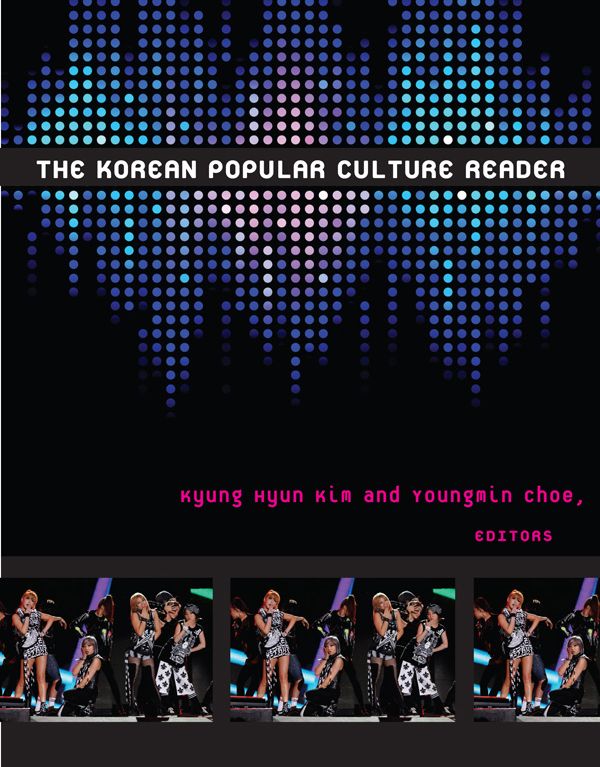
While awaiting the release of The Korean Popular Culture Reader from Duke University Press in fall 2013, and generally wondering where all the books are about PSY, I was reading one of the few books in English about Korean pop culture that hasn’t been reviewed yet on The Learned Fangirl, Hallyu : Influence of Korean popular culture in Asia and Beyond.

So while I don’t have anything to say about the book beyond read it if you want to read essays on Hallyu (Korean wave) that are reminiscent of the first “hey, kids are watching this anime thing and liking Japanese culture!!!” academic books in English, one essay gave me a “d’oh” moment:

If you’ve seen Lost, you’ve already seen a (very Americanized) version of a Korean drama.

In Medium Hot, Korean Cool: Hallyu Envy and Reverse Mimicry in Contemporary U.S. Pop Culture, Hye Seung Chung writes about the inclusion of Korean cultural influences in American pop culture, including how the Korean language impedes the bro-mance in the movie version of Starsky and Hutch. But Chung also details how groundbreaking the idea of having an entire episode in Korean *with subtitles in English* was for an American audience when Lost aired such an episode.

And while Lost was not a hit in Korea, so many aspects of the Sun/Jin storyline are so, so Kdrama — including:

  • class/family barriers keeping the couple apart
  • a true identity is shameful / family honor is essential
  • children held accountable for the debts of their parents
  • one true pairing — with the main couple meant to be together
  • sacrificing everything for family and love

If the show had been different, the two alternative universes that I would have wanted to have seen full shows about are the Sun/Jin kdrama — and the Miles/Sawyer Starsky & Hutch-style police drama.

So if you haven’t already started watching Korean dramas after reading The Learned Fangirl’s previous posts on Kdramas, now is a great time to start. Watch on Hulu, Dramafever, Viki, or other sites — and come back to tell us in comments about *your* first Korean drama that isn’t Lost!

“Scandal,” Olivia Pope and the privilege of being an anti-hero

by Keidra Chaney

I realized a couple of weeks ago that between Revenge, Scandal, and Nashville, ABC single-handedly brought new life to the nighttime soap opera, and I am not mad at that at all. Never a huge fan of crime procedurals, reality TV, or medical shows, I’ve watched more TV in the past season than in the past six or so years. I don’t want to sound completely shallow; I do watch and appreciate TV shows that illuminate the stories of hard-working, marginalized people, but I will not deny that I have a special place in my heart for the tales of the powerful and amoral. Blame it on a childhood of watching ABC daytime soaps with my grandmother, but there’s something about well-dressed people having sex with and/or killing each other that makes for great drama.

Which of course, brings me to Scandal. Just wrapping up its second season, the show went from a somewhat over-the-top political drama to a completely off-the-rails crazy nighttime soap for a generation of TV fans used to shows like 24 and Breaking Bad. The crazier the show has gotten, the more fascinated I’ve become. Impeccable, white-clad crisis management specialist Olivia Pope has horrible taste in men, drinks from her fishbowl-sized glasses of wine every night, and is to a certain extent, a Mary Sue. (I am pretty sure she is the first black Mary Sue I’ve ever seen in mainstream media – I’ll let you decide if that’s a good thing or not.) She besots nearly every straight man in her vicinity.

And let’s not forget the president (who Liv is having an affair with) killed a woman who was already on her deathbed, and the openly gay republican Chief of Staff puts hits on his best friend and his husband like he’s calling for takeout. Seriously, what the hell is this show on?!

But it’s compelling because it’s so unapologetically insane. This not being my first time at the Shonda Rhimes rodeo, I don’t expect it to last but it’s fun for now. Meanwhile, and not unexpectedly, this show in particular is not without its critics. I do feel sorry for the people who were expecting a House of Cards style political thriller. This show ain’t it. But the morality police really come out of the woodwork with this show in a particular, pointed way. I get it. Scandal is the first show with a black female lead in 30 years. 30, yo. That is a long time to wait for representation, and we get it in the form of a beautiful but messed up individual who is hard to root for at times because she’s nuts. Seriously, there was a point in the season finale where she went on and on about becoming the First Lady and she reminded me of Boromir flipping out in Fellowship of The Ring. (If you get that reference, then you get a sense for how thirsty for power she actually is. Also, you’re a big old geek.)

I get the criticism, and I get why some people had a problem with Scandal being nominated for an NAACP Image Award. The one black female in a prominent position on mainstream TV is at her core, power hungry, manipulative, and amoral, which is far from a positive portrayal, if that’s what one is looking for.

But maybe, just maybe we aren’t looking for positive. Maybe we are looking for over-the-top, morally gray, complicated, nutty. The kind of things we enjoy in shows like Mad Men or The Sopranos. Maybe some viewers enjoy having that room to be the anti-hero, the privilege granted to characters like Don Draper or Tony Soprano or Walter White. In pop culture, women and people of color (and women of color in particular) have the extra burden of not just being a character, but being a symbol. Because there are so few of us portrayed, we as viewers get protective about what’s being shown, and rightfully so.

Characters of color can so quickly devolve into racialized stereotypes when you combine the sometimes lazy character development that seems to happen too often on TV to the dearth of diversity in Hollywood’s writers rooms. But I would argue it’s not Shonda Rhimes responsibility to create “positive” characters, and that it’s a move forward that she can write characters who don’t have to bear the burden of being role models for their marginalized communities. I saw this post on Twitter the other day:

Think about it, it’s a conversation about a gay couple on TV that’s not “yay, so awesome it’s a gay couple on TV aren’t they a great example” but a conversation about how crazy and messed up their relationship is, the way you would about any other TV drama that features people in crazy relationships.

Now, there have been instances where race has been injected into the conversation of Scandal that have been clunky and problematic to me, like Olivia Pope’s WTF “Sally Hemmings” comment earlier in the season,

and the insane speech by Fitz (but penned by Olivia) in the 2nd season finale that positioned their extramarital affair as a win for race relations in America. That’s … crazy. But the wrongness of those moments (and visceral and varied reaction that they engendered) illuminates something more to me, that this is the first time a mainstream TV show has created an entry point where we can have many of these conversations about a black female character, even indirectly, and that’s incredibly frustrating. Because there are so few opportunities for a woman or a person of color to be put at the center of any mainstream TV narrative, the showrunners who do so, like Shonda Rhimes, or Mindy Kaling, and yes, even the loathed Lena Dunham, bear the extra burden of having to represent the varied and conflicting views of entire groups of people, rather than create the characters and stories they wish to – warts, missteps, and all.

Whatever you think of Shonda Rhimes as a writer and showrunner, Scandal is a fascinating show and pop culture phenomenon – and somewhat of a breakthrough – in that it allows a segment of viewers (women, POC, gay) the unusual opportunity of seeing a version of themselves reflected in the role of an anti-hero. These stories may not be “positive” but they are certainly compelling, and the popularity of Scandal could possibly crack open the door for more TV writers and showrunners to write for women, gay, and POC lead characters in a more nuanced way, without feeling the burden of having to create “role models” every time.

(A side note, I once watched a DVD of Jem and the Holograms with a writer’s commentary and apparently, there was a plan to make one of the Misfits (the villian characters) a person of color, but Mattel didn’t want to potentially lend to any stereotypes. Of course, as someone with a long history of rooting for villains, this annoyed me, but it gets to my point. Villains are fun. Anti-heroes are fun, but women and POC characters are often written into a creative corner because of the fear of being stereotyped, which is why we get so many boring, one-note characters, which become stereotypes in themselves.)

Star Trek Spoilers: Rantings of a tired moviegoer (did we say spoilers?)

By Vivian Obarski

I don’t know how to start this nicely, because I’m fed up. Not my usual fed up that I can break down into a nice simple logical and reasoned argument as to why I’m irritated. No, this is something entirely different — a visceral, emotional reaction that’s me being upset for no good reason. Most rational people would tell me to ignore this and wander off and do something else like knit another hat.

But this isn’t rational, this is fandom.

So I’ll just say it: I’m mad at the whole Star Trek Into Darkness marketing machine and how they’ve cloaked the villain’s true identity in secret. So much so that they’re willing to admit the possibility of whitewashing a major villain. And dammit, that’s something I want to know, because I don’t want to support that — there’s been enough whitewashing in movies as of late to make me feel a bit queasy about the news surrounding this one. Don’t pull a bait and switch on me with something like this. At least Avatar: the Last Airbender was honest and sprayed its whitewashing all over the damn news.

(SPOILER ALERT YOU HAVE BEEN WARNED).The whole news of Cumberbatch being cast as Khan is really disappointing to me. Asian people can’t get a role in Hollywood. The Asian actors I can easily think of are Lucy Liu, John Cho, Aziz Ansari, Mindy Kailing, Steven Yeun and Kal Penn.

I mean, I’ve watched a lot of stuff that is problematic on different levels — Argo had whitewashing, Tarantino films, any action movie where the white dude blows shit up — but this hurts more for some reason. Maybe it’s taking a major villain that was East Indian and turning him into something else? Normally us Asians, if we’re on screen (and not Cho, Liu, Ansari, Kailing, Yeun and Penn), we’re the extras in the background, the foreign faces that make up an organized crime group or a bunch of engineers. We had the spotlight for once man and they took it away.

Don’t get me wrong. I also like Cumberbatch as an actor. But (to quote a friend), if you look up the definition of WASPY Mo-fo, his picture is right by it. And the dude’s gotten lots of recognition for his work (Sherlock, War Horse, Parade’s End to name a few) — why not give someone else a chance at the spotlight?

What also makes me annoyed is how the press has kowtowed to JJ Abrams wishes and is now engaging in what looks to me like active trolling of its fans. They don’t say exactly what’s going on, but then they also nudge at it enough that people are whipping themselves into a frenzy trying to speculate on what’s going on.

Frankly, it’s exhausting to read. I’m exhausted reading the speculation, the coy reviews and the Internet rage about the clues given. This is like sitting in a room with everyone who gets a joke, but won’t let you in on it. You know what kind of people those folks are? Assholes.

I wish I could say I didn’t care. Most of me doesn’t. If your entire movie is going to be ruined by the release of the identity of the villain, how good is your movie?

Hell, I was spoiled with The Sixth Sense and the movie still worked beautifully — even more so because it felt more tragic knowing what the main character didn’t know. There’s been articles about how getting spoiled doesn’t wreck the experience for most people.

Not to mention, this whole silly dance makes it hard to discuss the film in print, as Calumn Marsh of Film.Com wrote

But being thoroughly averse to spoilers on principle does present problems for long-form film criticism, which by its very nature demands full disclosure and the ability to engage seriously with every aspect of a film, including major plot points and, indeed, even the ending. Film criticism is supposed to help illuminate a film, not simply offer a yay/nay declaration of its quality, and in order to do so well it needs to assume that its readers will be familiar with the material in question in full.

I don’t know about you, but I love reading film criticism because it illuminates what I’ve seen. I may not have always agreed with Roger Ebert, but his writing raised interesting issues and questions about the films I loved and made me see them in a new way. It was like having a great movie discussion with a good friend who loved the same thing you did, but also had a different take on it.

Star Trek’s marketing is really bothersome because JJ. Abrams is successfully taking away our ability to react or discuss things because it’s shrouded in tenuous hope or fear thanks to the speculation. And after months of this, it’s not exciting. It’s made me weary. I was excited (given that I really enjoyed the first movie and I think Benedict Cumberbatch is an excellent actor), but now I don’t care anymore. I’d rather watch RED 2 and see the old gang of assassins having fun right now. I’d rather watch Now You See Me to see a group of magicians pull of heists targeting the world’s largest banks. I’d rather watch This is The End — where the spoiler is the title. Hell, I might as well watch The Great Gatsby just to see how they mixed hip hop in with the Roaring 20s. I might know what the plot is and be spoiled on all those movies I listed, but you know what? It seems more fun than the paranoia that’s running rampant over on the Star Trek end of things.

Learned Fangirls Reflect on Game of Thrones: Jaime Gets His Groove Back


Incremental progress this week through “The Bear and the Maiden Fair” (Season 3, Episode 7). Herein, the ladies speculate on the necessity of a Game of Asses drinking game to get them through this slow, slogging mid-season.

Join us in a shot of mead and enjoy the latest installment in TLF’s weekly recap featuring three fans from very different perspectives: Laura Fletcher, a casual fan of the TV and book series; Corrin Bennett-Kill, a hardcore fan of the book and TV series (she has read all the books four times!); and Cheryl Collins, a TV show fan who has never read the book series. Miss us last week? Catch up and read “Misery Loves Company: The Climb.”

We invite you to join the discussion in comments!

Cheryl Collins
I hate to say it, but this episode bored me — again! The sex talk is boring. The torture is boring. The would-be flirtatious banter between Jon and Ygritte is boring. Bran and Jojen Reed are boring.

Laura Fletcher
I actually liked this episode more than most slow ones, but maybe that’s because of the steamy sex scene. *ahem* (I mean the one with Robb and Talisa, not poor Theon!) This was an episode of duos – both sexual and non-sexual.

I liked three scenes, and in hindsight it’s as much for their pacing as for the characters and purpose: 1) Jaime returning to rescue Brienne from the bear-fight pit, 2) Tywin looming over Joffrey on the Iron Throne, and 3) Arya being kidnapped by Sandor “the Hound” Clegane.

Cheryl
Those were my faves too. What are your thoughts on that long, leisurely scene in Robb’s tent?

After warnings by Catlyn about Walder Frey’s prickliness go unheeded, Robb and Talisa get down to canoodling while his mother exits with a worried glance that says: You are too preoccupied to take care of business.” Then sex. Things are going too well, and I assume Talisa will die soon.

Corrin Bennett-Kill
Yeah, the whole Robb–Talisa relationship is getting a bit — trite. That time would have been better spent developing some tension about the northern army’s tenuous position instead of lingering on naked ass. Le sigh.

Laura
The Robb and Talisa scene, though rather hot (don’t judge, ha!), was repetitive. Did we need Robb to say at least three times that his wife’s naked hotness was distracting? Or just once?

Cheryl
But you do have a sense that doom hangs close. Now, on to Tywin vs. Joffrey.

Corrin
That scene between grandfather and grandson was actually well developed. One of those classic GoT scenes where so much about the dynamic of the relationship is revealed by the physical space and movement of the characters rather than the dialogue. Tywin gives Joffrey his titles and nominal respect, but his slow progress up the steps until he stands, domineering, over Joffrey on the throne tells all about Tywin’s feelings about his grandson. “You are a means to my end,” he seems to say.


Laura

I found it powerful and telling that Tywin, unlike Cersei and Tyrion, could cow Joffrey without resorting to the slap (although I relish those slaps, obviously).


Cheryl

Tywin’s echoing, steady steps as he approaches the throne really helped establish his dominance and build tension. Joffrey seems to finally realize that he is a pawn, just as clueless and stupid as Sansa.

Why did it take Joffrey so long to figure that out that Tywin is an intimidating, powerful presence? Too busy practicing his crossbow skills? And this may be the first time we’ve seen those two in the same scene.


Corrin

It also makes Joffrey more dangerous to those he sees as weaker. It’s like a boy who is abused by his father who in turn abuses animals.

What do we think about the Sansa–Tyrion–Shae triangle?


Cheryl

Sansa’s dreams have been bloated and mottled by fantasies of courtly love, and now she faces the reality of being a high-born woman in that time and place, in that she is considered nothing more than a strategic pawn, who is now being married off to a powerful, important dwarf.

ong>Laura
But Tyrion’s not that powerful, as we’re reminded in his scene with Shae. The dynamics in that triangle go beyond who’s more screwed, as Tyrion and Cersei discussed last week. Sure, Tyrion is a Lannister, but that’s the only advantage he has. He’s being used for his name and his position as much as Sansa is, in some ways – and without his name, as a dwarf he’d be just as lowly as Shae (if not more so).

Corrin
The scene between Shae and Tyrion was especially heartbreaking as we realize that Tyrion truly cares for Shae. The brief moment at the opening of the episode of Bronn and Tyrion discussing his impending marriage to Sansa reminds us that Shae isn’t the first whore with whom he’s fallen in love. The repetition of his own personal tragedy – Tyrion’s father destroying or interfering with his loves – seems to be inevitable.

Cheryl
And we wonder, will he push back? If so, how? As someone who does not know where the story is going, you do sense he is reaching a breaking point.

Corrin
must. not. spoil. (He really, really is, Cheryl.)

Let’s talk Dany. She’s the bees knees this episode. My husband commented that this was the first time she really looked like a queen.

Dany is playing the Yunkai like a goddamned violin. She marches up to their walls with an army of freed slaves and announces, in front of the Yunkish slaves that accompanied the Wise Master, that she intends to free them, by force if necessary. Whatever do you think she’s up to?

Cheryl
Dany is really throwing her weight around, but for the forces of good (freeing slaves), not evil. If she was not doing something worthy, I would not like her at all.


Laura

I enjoyed seeing her commitment waver for just a moment when she saw all that gold – but then the camera showed her looking over at the kneeling Yunkish slaves, and her resolve hardened. Her ideals may not be practical, but they sure are strong.

Cheryl
On to Jaime and Brienne.

Jaime is finally living up to the ideal of what a knight’s courtly behavior should be—but in their mixed-up muddled-up shook-up world, where down is up in the chaos of war.

He saves the lady, but minus his stately armor or flowing white cloak. He looks like a ragged vagrant: handless and in what looks like a sackcloth robe. And the non-classically beautiful, non-feminine lady does wear a fancy dress – but it is muddied and torn as she faces off with a bear, armed with a wooden sword.

Yes, he finally – finally – lives up to the courtly ideal. Back in Season 1 (I think), his father tells him while skinning a stag that he needed Jaime to be the man he could be. Is he doing that now? And has he done his penance?


Corrin

A hand is a helluva price to pay for his sins, but he did, you know, push a nine-year-old out a window. So perhaps not so steep a price after all.

Laura
Melisandre’s great reveal to Gendry that he’s a king’s bastard fell flat for me. I had forgotten that he didn’t know, but we (the audience) all knew, right? Also, WTF is going on there?

Corrin Bennett-Kill
My husband and I had a lo-o-o-ng conversation about this season in general and this episode in particular as it relates to the wider series. This season has been a hard one for non-book readers to stay invested in. So much of what is happening in the story right now is the internal development and evolution of characters. Not a lot of action.

Most of Bran’s storyline plays out in his dreams in the books. How do you translate that to television? Not very easily. So many of these episodes have been about deepening relationships and revelations of character. All leading somewhere certainly, but not to a climax as readily apparent the first two seasons’. We don’t have Stannis marching on King’s Landing to produce tension. Instead, we have subtle maneuverings and plots being laid. Again, interesting, but difficult to make into compelling TV.

Cheryl
I’m sure that’s true, Corrin, so it seems that the writers are resorting to more gratuitous nudity and sex to keep us going. When I saw Robb’s ass in the first ten minutes I thought: oh god, this episode is doomed.

I won’t repeat what I said last week but that there is no obvious tension to keep us invested this season – except that we want Arya to get back, and Bran and Rickon to reconnect with their mother. That’s not enough.

Laura
Cheryl, I see where you’re coming from. I do think that most of my excitement, as Corrin said, comes from knowing what events lie ahead (or at least having a clue, based on the books). That knowledge gives me something to hang my narrative hat on, I suppose, and gives me patience to watch characters develop. Hints are being dropped, but they’re practically inside jokes. In past seasons, we knew what the coming action was going to be. Here, it’s mysterious, tenuous, and potentially frustrating.

Corrin

I feel like I have spent this entire season saying, “But wait! It’s gonna get better! I swear!” Perhaps the writers should create a support group and advertising campaign: “Game of Thrones Season 3: It Gets Better!”

Laura
Corrin, knowing what’s coming, do you think they should’ve sped up some of the coming plot points?

Corrin
I don’t know how they could have sped anything up.

The story arcs are so divergent and varied at this point that it necessitates abbreviating some points in favor of others. I really don’t know why they have included Theon’s story line at this point. Especially without giving it any damned context.

I think the failing of this particular episode is simply the writers were unable to create compelling scenes for a slow part in the story.


Cheryl

I agree, Corrin. The scenes they do include could be better crafted. There was lots of talking that felt aimless and way too long – over and over it felt like the scenes needed to be more tightly edited. The dialogue feels clumsy, obvious.

Laura
Every scene seemed a bit long, even when I liked what was going on.

Cheryl
Laura, let’s talk a bit more about your suggestion that this episode was about duos.

Laura
The episode’s title, “The Bear and the Maiden Fair,” is about a twosome. If this episode had any teeny string tying it together, it was this idea of opposites attracting: Robb and Talisa (we’re reminded that she’s from another continent); Jon and Ygritte, of course; Jaime and Brienne …

Cheryl
Don’t the bear and the maiden fair end up having sex in that song?

Laura

It seems they do. In the song the maiden is at first disgusted and afraid, but the bear seduces her, or she at least settles for it over her expected prince. (Many, many echoes of Margaery’s discussion with Sansa there!)

Cheryl
So maybe the idea is about learning about the tensions between expectation and reality (as with Sansa, Jon and Ygritte, and Jaime and Brienne).

Also, how to be with and accommodate another, and how much to give up of yourself as you merge identities – and which lines cannot be crossed. That’s the certainly tension with Jon and Ygritte.

Corrin
You could even insert Arya’s kidnapping by the Hound in the duos. She the maiden fair to his bear.

Cheryl
Another odd couple.

Corrin
Plus, much of Arya’s storyline is the crumbling of her worldview, much like her sister.

Arya keeps expecting people to behave with honor, follow the rules her father taught her, and they don’t. The Brotherhood lets the Hound go. They sell Gendry to Melisandre. The good guys do terrible things and the bad guys end up being not so bad.


Laura

Theon and his torturer are another duo, I suppose, but I’m ready for that to come to an end and/or have a larger purpose.

Cheryl
I hated that scene, with the nude girls arousing him for far too long – pure gratuitous titillation. That annoying horn that announces the anonymous torturer I think is meant to be a clue to his identity.

So, if we made a Game of Asses drinking game … what should we drink every time someone’s butt is flashed?


Laura

Mead?

Cheryl
Maybe that will help the viewing experience … and what to do we do when and if we ever see Podrick’s ass?

Laura
Attempt not to break our televisions, and then chug the mead.

Were you thrilled by the latest turns of events? Bored stiff (can’t show that on television)? Let us know in comments!

Learned Fangirls Reflect on Game of Thrones: Misery Loves Company

The things we do for love. Or honor. Or power. Or money. But does anyone ever get what they really want? Such are the questions raised by “The Climb” (Season 3, Episode 6).

Enjoy the latest installment in TLF’s weekly recap featuring three fans from very different perspectives: Laura Fletcher, a casual fan of the TV and book series; Corrin Bennett-Kill, a hardcore fan of the book and TV series (she has read all the books four times!); and Cheryl Collins, a TV show fan who has never read the book series.

Miss us last week? Catch up and read “Kissed by Fire.”

We invite you to join the discussion in comments!

Laura Fletcher
Although this was a slower episode, it set the table for big things to come and deepened some mysteries I’m excited to see come to fruition – whether I suspect the endings (based on the books) or not.

Cheryl Collins
You guys keep saying that! I want to believe you, but … we’re halfway through the season now, and it’s so hard to tell where we are going. Although I assume the end of this season will bring a dragon invasion in Westeros. Corrin?

Corrin Bennett-Kill
This episode annoyed me. Although there were some interesting things that happened, some of the adaptation choices are irritating (read: the Melisandre/Gendry thing). I know it’s difficult to adapt a story of the depth and breadth that Martin wrote into a teleplay, but I think some of the confusion non-book readers are having has to do with characters dropped for brevity’s sake or for their ancillary importance to the story line (read: the Loras as heir to Highgarden adaptation).

Cheryl
For me it’s about pacing. It’s hard to feel where the tension is this season. In Season 1, it was Ned’s descent into the hell of King’s Landing and whether Sansa and Arya would survive, among other things. Then in Season 2, the thrust was about Robb’s attack on the Lannisters (of course, there were many side stories). This season, it’s just not clear what the tension is supposed to be about that sustains us.

Laura
Right. I could make excuses and say it was a character-driven episode, but honestly it felt like the writers were moving around chess pieces and reiterating already established character traits (Melisandre, Arya, Jon and Ygritte, the Tullys) or ongoing arcs (Theon’s torture, Sansa the pawn). My husband, who is a TV-only fan like you Cheryl, actually said, “Nothing happened this week!”

Cheryl
Once again, I found some of the writing pretty lame, though as usual, the scenes with the Lannisters were the most sharply written.

Corrin
You’re so right, ladies. …There was a lot of exposition in this episode. Explaining why Edmure has to marry the Frey girl. Explaining Thoros of Myr’s “conversion.” Explaining the Lannister–Tyrell dynamic. It was a bit … dull.

Cheryl
But there was one big event to celebrate: we finally escaped the bleakness north of the Wall! If I had to watch any more grey scenes of arctic waste, I would bail.

The last shot of the episode was like a Technicolor dream. After suffering in the grey colorless void all season, Jon and Ygritte finally get to see a land of sunsets and colors. I felt that was almost a gift to the viewers: “Here, we’re giving you what you want” – you made it through with us.

Let’s pray to whichever gods are most powerful this season that we never have to go back. As I said in a comment last week (and please comment!), I felt my Seasonal Affective Disorder kick in whenever we traveled north of the Wall.

Corrin

There were a couple of highlights. My favorite moment was the dinner scene with Jaime and Brienne, when she helps him as he’s struggling to cut his food.

Cheryl
And they may be separated! I hope not. Neither seemed pleased with that possibility.

Corrin
That scene also gave us a bit more insight into Roose Bolton’s character and possible motivations. He’s playing both sides from the middle: appeasing his oaths to the Starks by sending Brienne back to the north, and making sure Tywin Lannister doesn’t come after him for maiming his heir.

Laura
Separating Jaime and Brienne gave me the biggest sad all episode – sorry, Theon, ha!

Wait, I take that back – Ros’s death gave me the biggest sad. I really liked her character, and I’m not sure if it was worth developing the characters of either Joffrey or Littlefinger to have them do that horrible thing to her. I get the parallel with Margaery’s crossbow sexualization scene with Joffrey earlier this season, but … shiver.

Cheryl
And Arya’s archery lesson (face, tits, balls). Do we think Littlefinger did that just to make sure Sansa would not go to Highgarden?

Laura
I think it was spiteful, and also strategic, since Ros had broken Littlefinger’s leash.

Corrin
It shows what Littlefinger is capable of and a bit more insight into what his real goals are. Varys is, in his own way, an honorable person. He wants the realm to survive and thrive. Littlefinger wants power at any cost, and it doesn’t matter how many bodies he has to step over to get it. That he could also ingratiate himself with the king by providing him a toy and at the same time eliminate someone who betrayed him is a cherry on the cake of his plans. He has a tidy, and yes sadistic, mind.

Cheryl
But I wondered if it was also trying to keep Sansa for himself – she’ll now see him as escape.

Corrin
Spot on, Cheryl. The kernel at the heart of Petyr Baelish is unrequited (and belittled) love for Catelyn Tully. Getting Sansa to come to him willingly would be a coup of epic proportions for him.

Laura
Littlefinger is one of the scarier characters, which is easy to forget. He’s more than slimy and tricky, and I suppose there was a lot of seamy underbelly in this episode. Tywin has never been in the running for Daddy of the Year, but Cersei and Tyrion’s forced marriages are pretty seamy. And of course, the Brotherhood without Banners and Melisandre can make all the excuses they want for shipping Gendry off to Stannis to make king potion or whatever, but as Arya says, it’s about gold.

Cheryl
Meanwhile, behind high walls, Cersei and Tyrion contemplate how fucked they are as they face their respective forced marriages.

Corrin
I actually liked that scene, Cheryl. It was a rare moment of commiseration between the estranged siblings, and a moment of humanity from Cersei.

Cheryl
I was interested in that scene because, as you both say, misery loves company, and they could finally make common cause. But also it showed them stuck behind the crenellated walls and windows of the castle, trapped by their father in loveless arrangements, separated from those they most love. Quite, quite different from Jon and Ygritte, who seemed to throw off the yokes of their binding sense of loyalty to god knows what and ascend the highest mountain, as it were.

Laura
Jon and Ygritte look too happy – I was half expecting Ygritte to die on the wall (and Jon would survive). Not that that happens in the books, but at this point, as we’ve said before, anyone and anything is fair game as a twist!

Cheryl
Jon seems to finally commit his loyalty to a real person while on top of the wall, straddling two worlds: the oath binding him on one side of the Wall (the Night Watch) and the false loyalty and a sort of freedom on the other (Mance Rayder and the Wildings). I felt like he was saying he was going to make his own way.

Corrin
Great observation, Cheryl! Scaling that wall crystallized something in Jon about who and what was most important to him. The idea of him forging his own path, coming back to the land he was raised in after having gone through trials, and emerging with a clearer sense of who he is and what he wants – Jon is finally emerging from the shadow of his own bastardy.

I liked that Ygritte basically told Jon that she knew he was still a Crow in his heart and further, that she knew this because she “knows” him and knows he’s an honorable man who is loyal to his bones. It was insightful and gave her a depth that I think she lacks in the books.

Cheryl
Sam also seemed to be edging toward some kind of freedom, as well, with his proto-family in the woods, looking for all the world like they are stuck in the middle of some very grim fairy tale. With the flock of Crows dwindling, the mutiny at Craster’s, and Mormont’s death, I wonder if the Night’s Watch is on the edge of imploding, which would conveniently give Jon and Sam an honorable way of side-stepping their oaths.

Corrin
Nothing like a pretty girl to stiffen a man’s spine. We also saw the dragon glass …

Laura
On an I-like-these-characters-note, I’m glad we got to see Sam and Gilly this episode, since they fled alone with a baby into the great north! Cheryl, did it feel like the show was being super-obvious that the spear Sam had would be important? It felt heavy-handed to me.

Cheryl
No, not at all, because we were introduced to it before. But now that you say it … hmmm.

Corrin
Laura, I think it was a tip-of-the-cap to the book fans who have been waiting for a Sam moment that should have already happened.

Laura
Corrin, agreed wholeheartedly.

Cheryl
And how about characters we don’t like? Back in Episode 3, Melisandre forsook Stannis after telling him his balls were crusty – I mean, “Your fires burn low, my king,” with that very tired look every guy who has been sent to the friend zone recognized.

Melisandre also mentioned that sacrifices must be made and that others share his blood. Now we get a little closer to finding out what she was talking about: she takes away Gendry, Robert’s bastard. He’s a bit more virile than Stannis. And it was after Gendry gave her the appreciative male-eye once-over. Be careful what you wish for, Gendry!

And Arya is abandoned, again.

Corrin
Stannis is still the one true king, but he’s not the only source of kingly blood: hence, Gendry. This is an adaptation moment. There was another bastard of Robert’s that, in the books, was living at Storm’s End that Melisandre wanted Stannis to take for her purposes. Gendry is able to stay with the Brotherhood.

Laura
An aside that may mean nothing: Interesting that Gendry the blacksmith is drawn into (and maybe sacrificed to?!) the fiery Lord of Light.

Cheryl
Ooohhhh. Do you think that eagle flying overhead in the last scene was the “Love, Actually” kid (aka Jojen Reed) with Bran and Rickon?

Laura
I think we were supposed to think that was the Wildling warg’s bird, but interesting possibility.

I suppose Bran’s ragtag band of misfits is something we didn’t discuss. But, honestly, yawn.

Corrin
Yawn, indeed. Moving on. OMG! The scene between Robb and the Freys!

Cheryl
Ahh, Blackfish.

Laura
And Edmure the milquetoast.

Corrin
Cheryl, how did you read that scene?

Cheryl
Not that big a deal – but I suppose I’m wrong? Edmure makes the sacrifice. Good for him. Can’t wait to see who his wife will be.

Laura
I worry that Edmure will somehow screw things up for Robb and, by extension, the entire North.

Corrin
I know I take a lot of swipes at the writers who are adapting the books to the show, but this is one of those moments where they need a tip-of-the-hat instead of a wag-of-the-finger. They are treading the line of fanatics like me who know the story and TV-only fans.

I was squirming in discomfort at the scene with the Freys because of what I know. Those who don’t know the backstory won’t have that reaction, but they get a lot of meat out of the Melisandre-Gendry scene. A little something for everyone, and done surprisingly deftly for all that needs juggling.

Laura
This is good transition to Olenna and Tywin, which isn’t in the books but was awesome to a book fan. I find it fascinating that Olenna and Tywin have that tete-a-tete, ending with Tywin’s seeming victory – though I wouldn’t be surprised if Olenna has more up her sleeve, and that Sansa and Loras’s wedding was just her opening parry.

Cheryl
That’s how I felt – that was just the first battle, not the war. Finally there is someone who is not afraid of him.

Laura
Yes! That scene was a nice reminder of how a matriarchy can still exist in Westeros, if not in literal power, then at least in exerted power.

Now how about that ladder of chaos that Littlefinger mentioned, juxtaposed with the Wildlings scaling the wall?

Cheryl
About the wall: it seemed Jon pushed through his fear – of everything – and finally claimed what he wanted and needed. Most of us never do. As Littlefinger says, most “cling to the realm, or gods, or love.” Littlefinger is bound to nothing but his own amoral desires.

Laura
I thought it was very foreshadowing-y, for Littlefinger specifically and for the show in general. The Wall, after all, is meant to guard Westeros from chaos.

Cheryl
Just as the Night’s Watch is falling apart.

Laura
Yes, exactly! And now that we know the White Walkers are real and very dangerous, plus the Wildlings now know the best places to scale the Wall without being shot down by the Night’s Watch (thanks to Jon’s intel), this chaos is going to be just as important as the political machinations in King’s Landing and elsewhere. Perhaps this episode seemed dull because at this point a lot is balancing on the edge of a knife.

Cheryl
That’s hopeful! I guess things are building up to something or other, although it doesn’t quite seem so yet.

Yes, we hope Westeros burns, because it will make better TV!

Did that last kiss on the Wall make you wince? Or were you thrilled by the latest turns of events? Bored stiff? Let us know in comments!

Songbird in the Cage: Thoughts on Bioshock Infinite – SPOILERS!

by Kristin Bezio

First and foremost, HERE THERE BE SPOILERS!!! If you haven’t played the game and want to know if you should, my answer is YES! Go buy it, go play it. It’s totally worth it.

But from this point on, there will be nothing held back for the sake of those who have not finished the game. So if you don’t want me to wreck the ending (and there is definitely and ending to wreck, if that’s your thing), stop reading now. Seriously.

Okay. Here we go.

THE GOOD
There’s a LOT of good in this game. First, the art. The game is gorgeous. The details – if not the resolution on the Xbox – are meticulous and create a sense of reality to the world of Columbia. There are even hummingbirds. One thing that I have to give Irrational credit for – in both Infinite and in the original Bioshock – is that the worlds they create are unbelievably rich. No level repeats the same map as any other level, each space feels like a real, genuine space that could BE somewhere and have purpose.

Some examples. There’s an ice cream parlor, in which people sit and eat ice cream. There are coins on the floor, just as though someone dropped one while paying for a cone. And after nightfall, it closes. The carnival games are playable – you can learn to shoot by shooting at cardboard cutouts, and you can win prizes. The “propaganda” impressed me in Bioshock, and it manages to create the same feel of imposed censorship that people tolerate and accept simply because it’s always been there, like the ads on a bus or the flyers people tape to telephone poles.

And then… the light. Light and shadow in this game have been elevated to a fine art. The first thing you encounter in Columbia is what amounts to a church – resplendent with both candles and sunlight. For those who have played Bioshock, the light is one of the most shocking parts about Infinite. We come in expecting the dark and gloom of a survival horror game, and instead we are bathed, literally and figuratively, in light. And it WORKS. The horrific contrast of Columbia is its beauty – the spaces, the colors, the light, the vividness of the whole world is overwhelming, and the ugliness of the acts, attitudes, and people present a stark contrast to it.

And then there’s the music. This game has the most appropriate, beautiful, haunting, and inspiring soundtrack I’ve ever heard in a game. It is definitely the only game that I have sung along with while playing. The foley art, the ambient noise, and the vocal tracks are like aural light that permeate the entire experience. I want this soundtrack. It made me feel warm and fuzzy and choked up at the same time, especially with the spirituals (and I’m generally a profoundly anti-religious person).

Aesthetics aside – and it’s very hard to put them aside, as they’re quite possibly the best part of the game – there is also Elizabeth. Now there are a couple of things I found fault with in her characterization (to which I will get later), but in terms of her personality and her mechanical function, Elizabeth represents a huge leap forward in terms of companion characters.

One of the worst parts of Bioshock was the Little Sister escort mission at the end, in which you as the player have to keep a Little Sister safe through a maze of angry splicers. And I wanted to shoot her myself less than a quarter of the way through. But Elizabeth can take care of herself. And not only can she take care of herself, she can take care of YOU. In combat, she finds ammo and health and salts (which are like your “magic”), and at other points in the game, she finds coins and gives them to you. She will also draw your attention to loot and other interactive or interesting things. In other words, she requires no maintenance from a gameplay perspective whatsoever. And she’s also narratively interesting – she comments on things, gives her opinion on plot points, and is the fundamental source of the entire plot.

And there are other characters I like, too. The Luteces, for instance. They are interdimensional beings (sort of…), and they’re hilarious. They’re also taken straight out of absurdist theater, specifically, Tom Stoppard’s Rosencrantz and Guildenstern are Dead, so I kicked myself when I didn’t realize that they – like Rosencrantz and Guildenstern – are dead. Pretty much the whole time. At least in some of the universes. I got the reference pretty much right away, since their ridiculous speech pattern (which is awesome) and their scene in the carnival are straight from the play – they’re playing a game of coin-toss, in which the coin (against all odds) is always heads. Of course, there must be some universe where that is the case, and in each coin flip, they are creating a new, parallel world in which that specific coin actually comes up tails. Great, great stuff.

It’s also clever. Very clever. (Maybe too clever.) The opening sequence parallels almost exactly (and includes some of the exact same lines, such as “Is it someone new?”) the opening and entry sequence from Bioshock. This is one of many examples of cycles in the game – the repetition of a sequence you already know, the fact that the first scene in Columbia contains circular spaces, the round candles, and the cannon in the background (“Let the Circle be Unbroken”). The lighthouse has a spinning light (like they do), and even the money is entirely circular. Circles are a thing in this game. In fact (SPOILER!!), the entire game itself is a circle, turning back upon itself in the end and eradicating its own synchronous existence.

THE BAD
So there are bad things about Infinite. Quite a few of them. That said, I LIKED the game. I enjoyed almost all of it (the end will be addressed in a little bit). I think it’s a great example of videogames as art, and of videogames trying to achieve the level of critical complexity that other media – like literature and film – have already achieved. I’m glad it exists. But – as I said to a friend of mine today – it’s a B+. It’s good, really good, but I wanted it to be better. And not only did I want it to be better, but I can see HOW it could be better.
Most of my complaints are thematic or narrative, but before I get to those, a few mechanical things. First, why do I (as Booker) keep eating food out of trash cans and off the street? Gross. Also, why do people keep throwing money in the trash? I understand the point of looting for health, salts, money, and ammo, but some of the places they put it are just silly.

Second, why are there different types of enemies? I’m not speaking in game-design terms – I know that having different AI to fight is part of what makes games interesting. What I don’t understand is where the diferent classes came from. There are Crows (who are, for the Bioshock players, essentially Houdini Splicers), Handy-Men (who make very little sense to me and are really annoying to kill), Patriots (which are hilarious on a variety of levels, including the fact that they announce “We hold these truths to be self-evident” before opening fire on you), and strange horn-headed things that act like security cameras in the asylum. And it’s really unclear where they came from or why they’re all quasi-mechanical or supernatural.

Which brings me to the other narrative issues in the game. First, I’m not convinced that string theory works the way this game seems to imply (also, lighthouses? Really?). I like that they’re playing around with temporal shifts, alternate dimensions and time-continuua, so I’m willing to forgive most of the glitches. The fact that the game destroys its own existence seems too extreme to be a paradox that’s just too impossible to be feasible. A lot of it is really neat – but some of it still doesn’t make sense, and I probably know more about particle physics than the average gamer (although not as much as someone who has a degree in physics, so you never know).

And then there’s the heavy-handedness of the symbolism in the game. This is not just a symbolism stick, this is a spiked exploding club with glitter that burns. And the game smacks you with it from the very beginning and doesn’t stop smacking you with it even when the credits are rolling. The game is profoundly anti-Exceptionalist (an attitude of which I wholeheartedly approve), and is trying to make use of a framework of racism to encourage a general attitude of tolerance and acceptance (and since the political issue of our day is gay marriage, I’m pretty sure that’s what we’re driving at here). It also vilifies both the conservative tendency to all but worship the Founding Fathers (who were hypocrites, as any studio based in Boston can’t help but knowing, especially one down the street from the burial place of John Adams) and born-again Christian fundamentalism. But I actually find myself missing subtlety. I want nuance and challenge, not a spiky stick whacking me across the face every five seconds.

Which brings me to…

THE UGLY
There are two things about this game that really, really bothered me. The first isn’t actually as big a deal as I just made it sound, but given the current context of gender-related concerns in gaming, irritates me because it seems like they could have avoided playing straight into the problematic stereotypes we’ve been talking about for the last year or so. Now I do understand that the game has been in development for about four years, which provides some excuse, but still.

Elizabeth. As much as I do really like her mechanically and enjoyed playing with her, she’s the kind of female victim that irks me – the damsel in distress that was the focus of Anita Sarkeesian’s first Tropes vs. Women in Videogames video. And Elizabeth is one. Now she’s no Princess Peach – Elizabeth is the most powerful thing in this game, and she’s got attitude and spunk, but she is constantly being victimized throughout the game. And because (REALLY BIG SPOILER!) Booker is also Comstock, not only does she need to constantly be rescued by Booker, but Booker is constantly having to rescue her FROM HIMSELF. It’s like the worst sort of abusive father-daughter relationship ever. (And was the cleavage-tastic costume change really necessary halfway through? I know the transition from the girlish outfit to the woman’s dress is symbolic of the fact that she just grew up because she killed Daisy, but does she have to be SO voluptuous in it?) In essence, while she’s better than many non-hero female characters, I’d have liked her to come out of it on her own at least once, without needing Booker’s help.
And then there’s the racism. Yes, I understand that the point of Columbia is to focus on the abject bigotry of the city’s idology, on the horrific racially-motivated things that happened in the past, such as at Wounded Knee and during the Jim Crow (is that why it’s Murder of Crows?) era. I get that. I understood it in Django Unchained, and I understand that Irrational is under no circumstances advocating for that sort of behavior. But.

The Vox Populi who start the game are not the Vox who end it. The early-game Vox are the oppressed who have an underground network of information and sabotage. The late-game Vox are barbaric, violent, and bloodthirsty, dress up as devils, and scream in your face as they try to kill you. You feel sympathy for the early Vox. You want them to win. You want to do whatever you can to help them. At one point, Booker is confronted with an interracial couple about to be “stoned” with baseballs. He has the choice to throw the ball at the couple, at the barker, or not at all. If he throws it at the barker, the couple later finds him and thanks him. It’s clear that the game’s agenda is not racist.

But the late-game Vox turn on you, and their actions – especially Daisy’s, when she tries to murder a child (probably another throwback to Bioshock chiding the player for spending a game possibily killing children him/herself) – are the epitome of bigoted stereotypes. And yes, I do understand the logic that the Vox have only become violent and barbaric because they were treated by the citizens of Columbia as subhuman. However, the game never complicates this late-Vox image. It never returns us to humanity from barbarity. All it does, in the game’s final moments, is efface the whole thing in a highly problematic twist.

Because when Booker chooses to allow himself to be drowned, he is sacrificing himself as the white male sinner-savior (Jesus complex, anyone?) so that the racism of the world can be eliminated. A twist on the white-man’s-burden in which Booker literally dies to obliterate the racism of Columbia. And by erasing that racism, which in its historical context was very real, it implies that racism is gone, that it no longer exists. But it isn’t. We can’t just say “Oh, things used to be so bad, but thanks to white people, it’s all better now.” Because it isn’t, and that’s a point that Tarantino got but that seems absent from Infinite.

THE END

All that said, I like what Infinite is doing, and I hope they keep doing it, and keep improving their art (because they did make huge strides between Bioshock and Infinite). But as much fun as I had throughout the game itself, the ending left me feeling frustrated, mostly because of the issues I have with the way the game didn’t complicate its own depiction of race and gender. In part, too, I didn’t like that the game chose to undo itself, although I can respect its decision to do so. I also hate boss fights, and the last one in this game was confusing as hell – I didn’t actually know what i was supposed to do, so I lost it the first time simply because I didn’t know what was happening.

But ultimately what I think bothered me the most about the ending was that the game was too proud of itself. (The developers should be proud of themselves for a great job, but the game shouldn’t show that off.) It knew it was art and it wanted to show off how smart it was by explaining string theory (in a mediocre way), by dropping Booker and Elizabeth in Rapture for two minutes, and by holding out until the end of the credits to show you that Booker and Anna are still there, in another timeline. (Which itself is a problem, because, as my friend remarked, isn’t there also going to be a timeline in which Booker kills the Elizabi instead of letting them drown him?) Yes, Infinite is a really good game, but it isn’t quite what it thinks it is.

Our MIT8 Presentation: The Interaction Between Public and Private Identities and Social Media Policies

We are sharing the written version of our MIT8 Presentation with everyone who wasn’t able to come to this amazing conference. We (at least one of us) have presented earlier versions before at several other conferences, including the Third Annual Internet Law Work In Progress Symposium. As always, we are open to comments and suggestions – and we thank all that have helped shape this conversation.


Introduction

The line between personal and professional identities is often blurred – and the increasing use of social media networks makes the line only more blurred. We are using the example of athletes not as the endpoint for this discussion, but instead as a starting point; athletes, especially team-based athletes, are at the nexus between public and private: never truly representing only themselves, even online.

Social media allows athletes a unique opportunity for athletes to connect directly with their fans, but it also allows for the risk for athletes – and all social media users – to share statements are best not be shared publicly – ranging from threats to racist or sexist statements (like two 2012 Summer Olympic athletes), to inappropriate statements, to NFL player Houston Texan Kareem Jackson tweeting pictures of cock fighting.

Major League Baseball’s  (MLB) policy demonstrates that professional sports sees the overall value in using social media,

“recogniz[ing] the importance of social media as an important way for players to communicate directly with fans. We encourage you to connect with fans through Twitter, Facebook, and other social media platforms. Along with MLB’s extensive social media activities, we hope that your efforts on social media will help bring fans closer to the game and have them engaged with baseball, your club and you in a meaningful way.”

Limitations by teams and organizations ranges on their members’ social media usage occurs from school-age athletes up,  but this essay primarily focuses on limitations imposed on adults in both professional sports and (technically) amateur sports, such as college athletes.

Some teams ban athletes and coaches from using social media during game time (including practice time).  However, many of the restrictions are much more limiting to the lives of athletes. To continue participating in college athletics, college athletes at many schools cannot use a list of banned words on their social media accounts — and these accounts are monitored by third-party applications.  The banned words can have multiple meanings, including entirely innocuous ones, such as ice, monkey, nine, slant, Spiderman, and zipper.

While some claim the purpose behind such bans and limitations on social media by athletes is to “help the athletes protect themselves,” the larger overall concern is based around branding and marketing of the teams (and schools). And the teams are willing to admit this: the University of Kentucky athletics spokesperson has said that “the only content of concern is what the public can see because that is what affects ‘the brand’ of the university and the athlete.”  Thankfully, some academic institutions, including public academic institutions do have social media policies that mention not only athletes, but also the difficulty in separating out personal and professional lives, including for athletes.

However, there are now an increasing number of state laws and National Labor Relations Board decisions that address how much an employer or educational institution the social media use of employees and others. The types of issues that employers and educational institutions face with athletes are often true in similar, broader cases.

We chose to use athletes as a case study on the complications of creating a social media policy for those that wish to limit social media use by employees, students, or others that can damage a brand.

Continue reading